Dossiers - Climate and energy policy
Swiss Green Economy Symposium 2026: What makes Switzerland resilient
10.09.2026
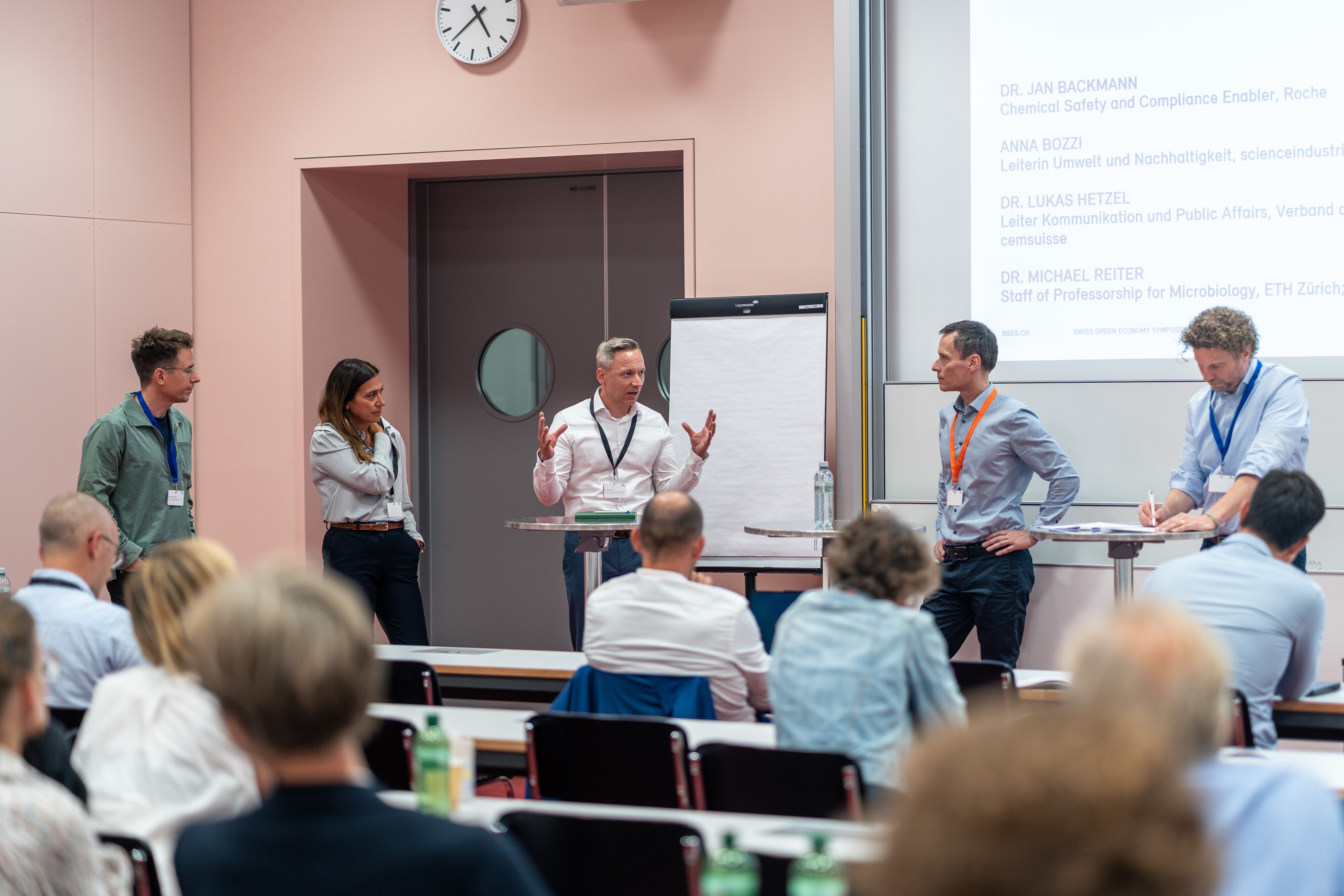
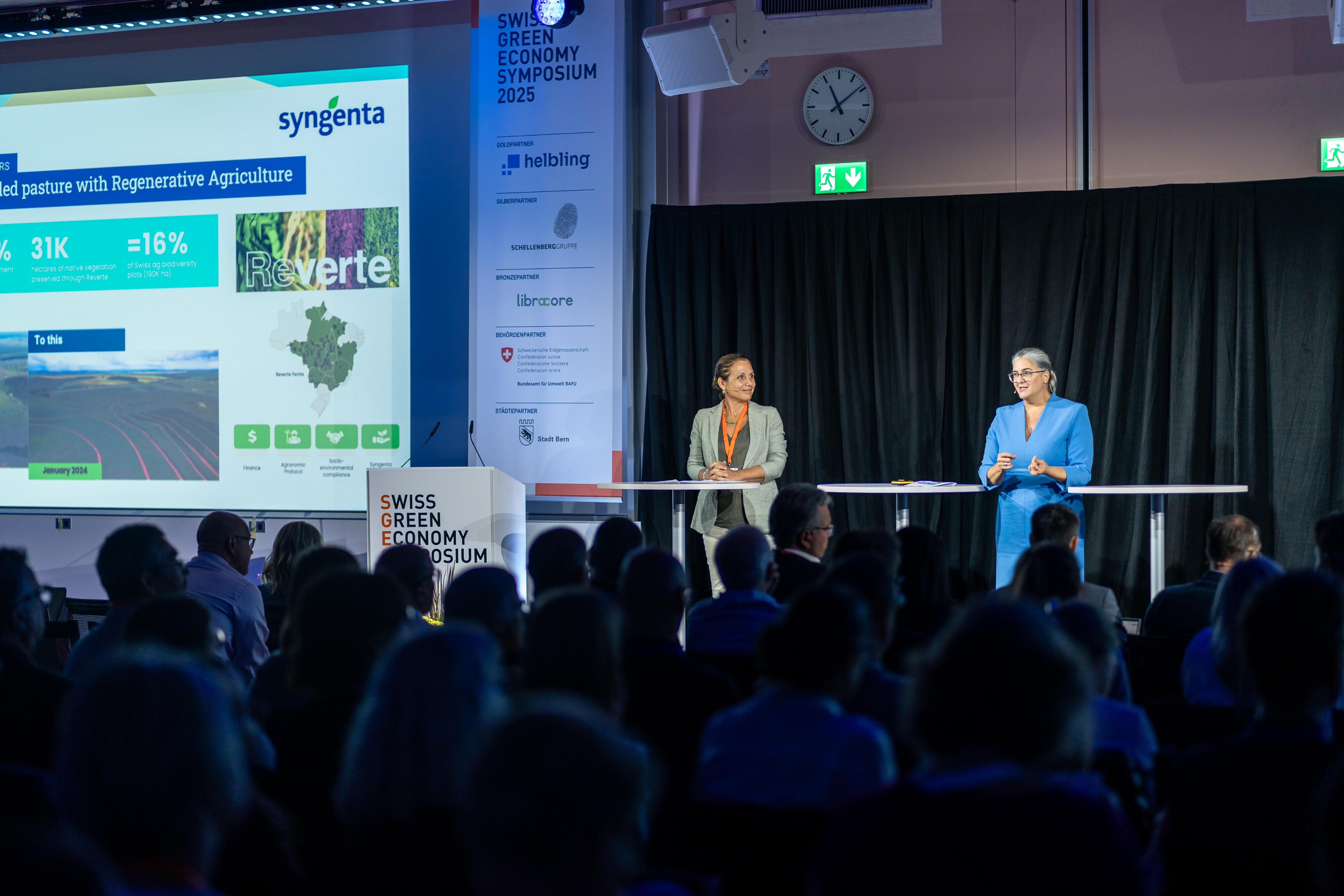
Resilience does not stem from a single factor. It flourishes where research finds its way into production, where regulation takes conflicting objectives seriously, and where companies safeguard their natural foundations. At the Swiss Green Economy Symposium and the Biodiversity Congress, held from 1 to 4 September 2026 in Winterthur, scienceindustries and numerous member companies demonstrated how this can be achieved in practice.
Decisions on security of supply are made before a crisis strikes
If an active ingredient is missing or a supply chain breaks down, it is too late to take preventative action. Stephan Mumenthaler, Director of scienceindustries, therefore traced the path from the research laboratory to the supply chain: research and development create new solutions; raw materials and intermediates enable their manufacture; production facilities scale them up to industrial levels; and logistics ensure they reach their destination.
The chemical, pharmaceutical and life sciences industries form a central part of this system. They account for 52 per cent of Swiss exports, more than a third of private investment in research and over 80,000 jobs. At the same time, 98 per cent of their products reach international markets. Raw materials, intermediates, knowledge and technologies also come from all over the world.
Openness does not automatically make Switzerland vulnerable. If managed correctly, it makes the country a more resilient business location.
‘Switzerland does not have to produce everything itself. It must diversify its sources of supply and maintain its own research and production capabilities.’
A blanket repatriation of global value creation does not solve the problem. Calculations by the OECD show that comprehensive relocalisation could reduce world trade by more than 18 per cent and global real GDP by over 5 per cent – without making supply chains any more stable.
Switzerland must therefore make the right adjustments: keep markets open, expand the free-trade network, stabilise relations with the EU, protect intellectual property and speed up regulatory approvals. Equally important are a skilled workforce, a secure and competitive energy supply, and clear, internationally compatible rules. This is how the research and production capacities are created that will actually hold up in the event of a crisis.
Not every substitute is a step forward
Dominique Werner demonstrated in the discussion on PFAS just how quickly simple demands can fail when applied to complex situations. Their exceptional durability is both a blessing and a curse: it makes these substances valuable for demanding applications and, in some cases, difficult to replace – for example in medical technology, energy supply or industrial production processes. However, if PFAS enter the environment, it is precisely this stability that becomes a problem: they hardly degrade at all and can pose a long-term threat to people and the environment.
The crucial question is therefore not just: Can we replace a substance? But also: What will take its place – and is the alternative really better when viewed in the broader context?
Where suitable solutions exist, companies should implement and further develop them. Where they are lacking, research and innovation must open up new avenues. At the same time, it is essential to consistently reduce emissions and to assess the various applications and risks with precision. A risk-based regulatory approach, applied with a sense of proportion, creates the necessary scope for this. Blanket regulations, on the other hand, risk merely replacing problematic substances with alternatives that are technically unsuitable or no better for the environment.
Biodiversity belongs in corporate strategy
Anna Bozzi, Head of Environment and Sustainability at scienceindustries, highlighted another production factor that rarely features in traditional balance sheets: biodiversity.
‘Biodiversity is not just something that companies must protect – biodiversity is something that companies need.’
Intact ecosystems secure raw materials, water and biological resources. They stabilise the foundations of production and supply chains. At the same time, genetic resources, microorganisms and natural processes provide the basis for new active ingredients, materials and processes.
If these foundations become scarcer, the risks increase: shortages of water and raw materials can hamper production, extreme events can disrupt supply chains, and new requirements can increase regulatory complexity. By contrast, those who strategically integrate biodiversity unlock opportunities – ranging from industrial biotechnology and nature-inspired innovations (biomimicry) through to resource-efficient processes, new markets and business models.
The path to achieving this can be summarised in three active steps: understand, embed, scale up. First, companies assess their dependencies and impacts and identify relevant sites, raw materials and supply chains. They then integrate biodiversity into their strategy, risk management and investment, procurement and development decisions. Finally, they implement prioritised measures, measure their impact and replicate successful approaches across other areas.
For this to succeed, companies need a small number of robust and internationally recognised indicators rather than additional complexity. The political and business sectors must work together to resolve conflicting objectives between biodiversity, climate, energy, land use and security of supply. Rules that are open to technology as well as practical tools will help, particularly small and medium-sized enterprises.
Resilience arises from collaboration
Supply chains cannot be filled by stockpiling alone. PFAS do not disappear through blanket bans. And biodiversity is not protected by reports alone. Progress is achieved when the research community, business and the political sphere understand the interconnections and use this understanding to develop effective solutions.
This is precisely the common message of the three articles: a strong industry, a competitive business location and ambitious sustainability targets are not mutually exclusive. When properly linked, they reinforce one another.
Impressions